.jpg)
What’s the Difference Between Open-Cell vs. Closed-Cell Spray Foam?


Open-Cell vs. Closed-Cell
Not all spray foam insulation performs the same. Open-cell vs closed-cell foam - they are made from similar base components and can often be installed using the same proportioning equipment, but they behave very differently once applied.
Choosing the right one depends on how the building is used, where the insulation is going and what problems need to be solved.
Open-Cell Spray Foam
Expands aggressively to fill cavities and irregular spaces
Lower density with moderate R-value per inch
Allows some vapor permeability for drying potential
Open-cell spray foam is designed to expand significantly when applied, often up to 100 times its liquid volume. This allows it to completely fill wall cavities, roof decks and hard-to-reach voids. Because of this expansion, it is very effective at sealing air gaps in wood-framed construction, especially in attics and interior walls where full cavity fill is possible.
It is most commonly used in residential applications such as attic rooflines, above-grade walls and sound-dampening partitions. Its softer structure also makes it better for absorbing sound compared to closed-cell foam. However, because it is more permeable, it is not suited for areas with high moisture exposure like basements or exterior below-grade walls. It allows assemblies to dry, which can be beneficial in certain climates and wall designs.
Closed-Cell Spray Foam
High density with a higher R-value per inch
Acts as a moisture barrier and resists water absorption
Adds structural rigidity to walls and roofs
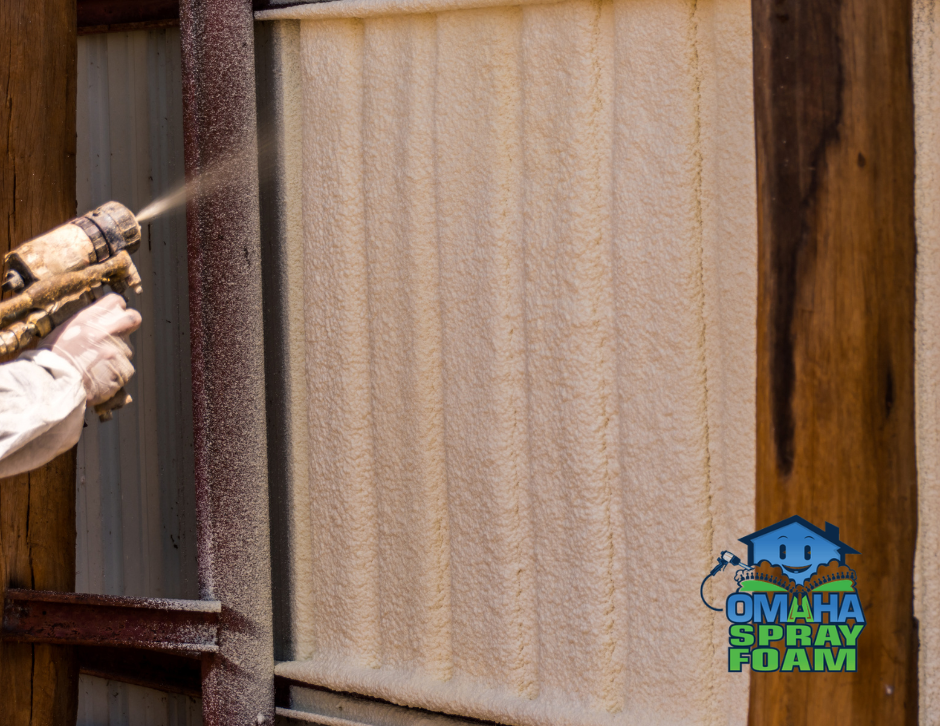
Closed-cell spray foam is much denser and expands less than open-cell, which allows it to be applied in controlled layers. This makes it ideal for situations where space is limited but high thermal performance is required. It creates a tighter, more rigid insulation layer that also blocks moisture, making it suitable for basements, crawl spaces, metal buildings and exterior applications.
Because of its density, closed-cell foam strengthens the assembly it is applied to. It adheres tightly to surfaces like metal and concrete, helping reduce movement and improving durability. It is also the preferred choice in agricultural buildings and commercial settings where condensation control and long-term performance are critical.
How They Work Together in Real Projects
Both types of foam are typically installed using the same spray equipment, with adjustments to temperature, pressure and formulation depending on the product. While they can be used within the same project, they are not mixed together in a single application. Instead, each is applied in specific areas where its properties are most effective.
In practice, we often use open-cell foam in interior wall cavities or attic assemblies where expansion and sound control are beneficial. Closed-cell is then used in areas exposed to moisture, structural stress or limited space. This combination allows us to optimize performance without overbuilding or overspending.
Need residential, commercial, industrial or agricultural insulation in Omaha? Call us. At Omaha Spray Foam Insulation, we help property owners choose the right material for every project.


Comments